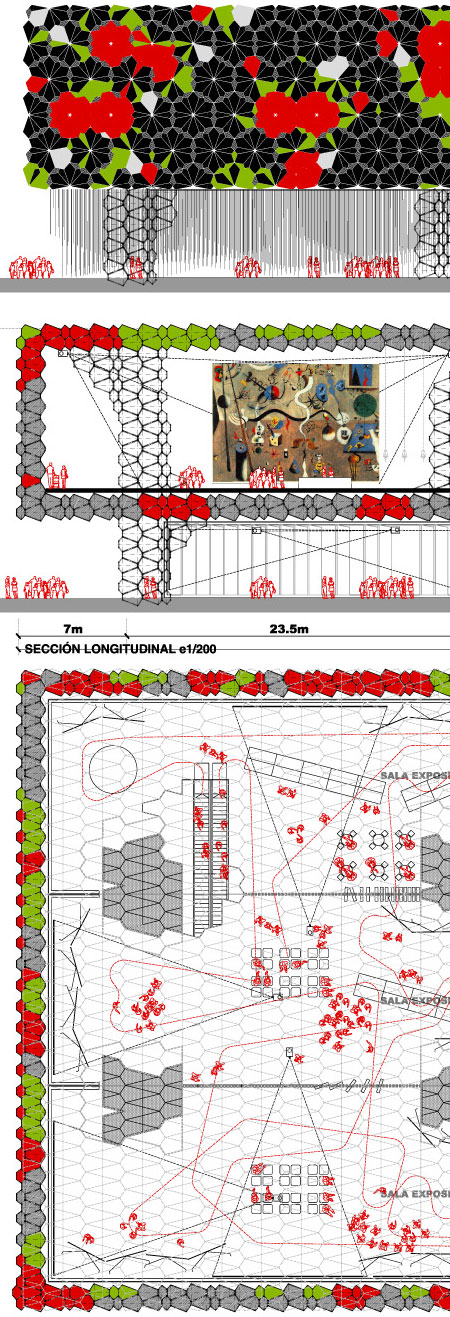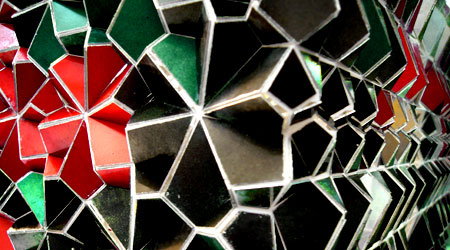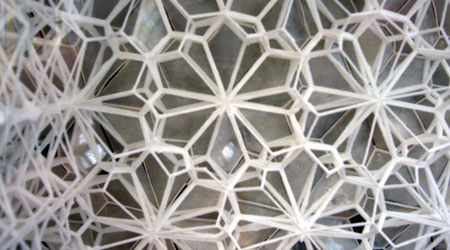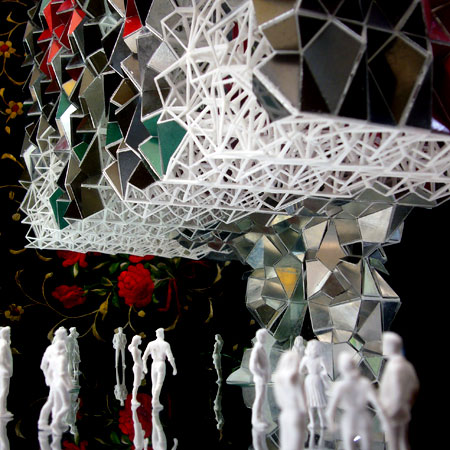
AR07021SZ-Shenzhen Mocape International Museum of Contemporary Art

07 021 SHENZHEN MUSEUM. SHENZHEN. 2007 21.900M2
  Museum Of Contemporary Art & Planning Exhibition competition

AR7021SZ-01-EQUIP.jpg

In search of light and for the people: an enormous space for art
We are in Shenzen, since the late 70’s has been one of the world’s most vigorous growing cities. The eighth world’s highest skyscraper is part of the city’s skyline, and it is easily to spot quite a few more higher than 200 m. Still growing, both the city and its buildings. Shenzhen defines itself by growing. It is a city with people that lives for action.

IN SEARCH OF LIGHT
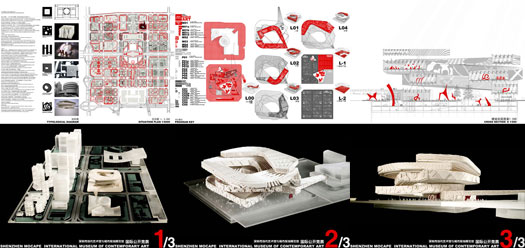
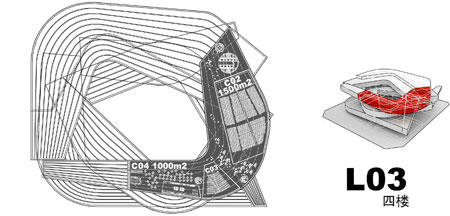
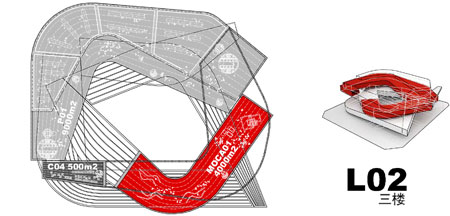
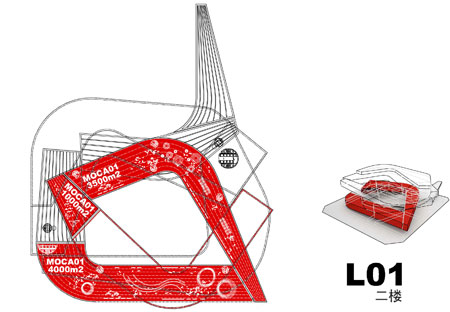
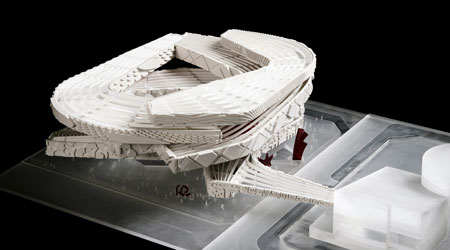
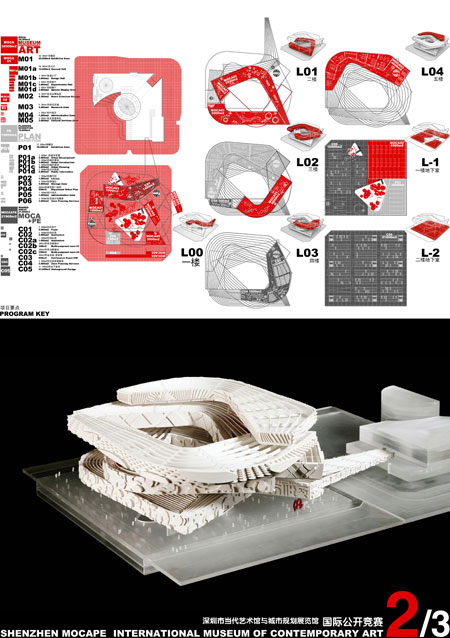
The proposal for the Museum of Contemporary Art and Planning Exhibition, MOCAPE, is a promenade of the building itself towards the light, like a metaphor of the city’s endless activity in the manner of a spiral that aims to create a space for contemplation that draws its concept from the dynamic character of Shenzhen.

PILE THE SCHEME
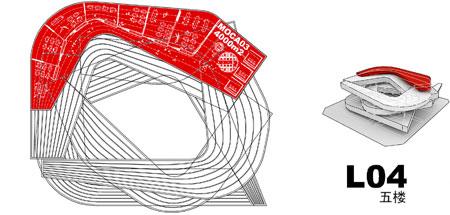
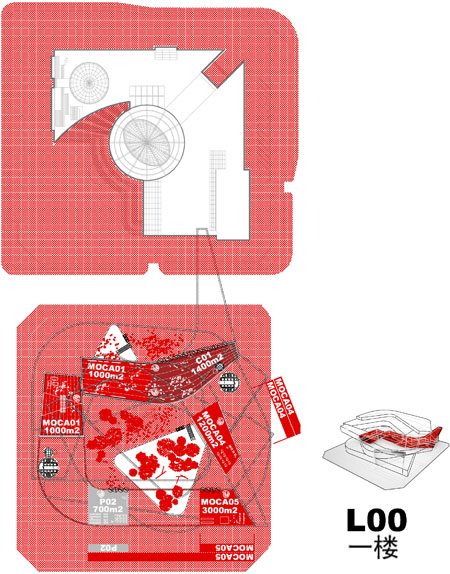
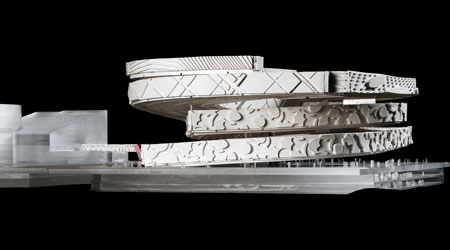
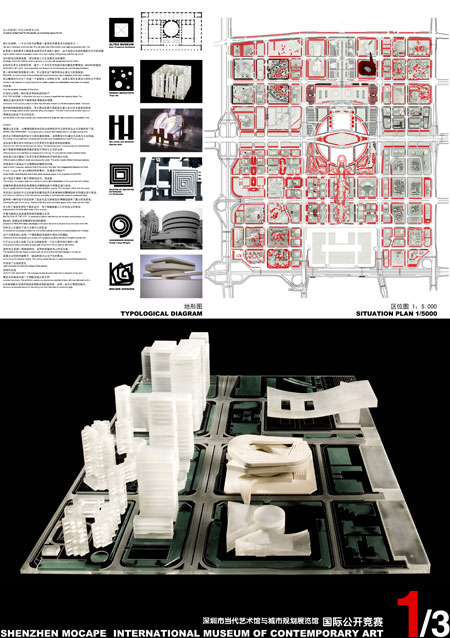
In Shenzhen the land is a precious asset that one needs to share. Given that, it is not a surprise the dimension of the area to be built, which is smaller than the area needed to fulfil the museum necessities. In that situation the more natural strategy seems to build upwards, piling the program. Once decided to organize the scheme overlapping floors  the next fundamental step is to decide which is the most suitable light needed and how to get this light to perform successfully in the museum.

SPIRAL AND ROOFLIGHT
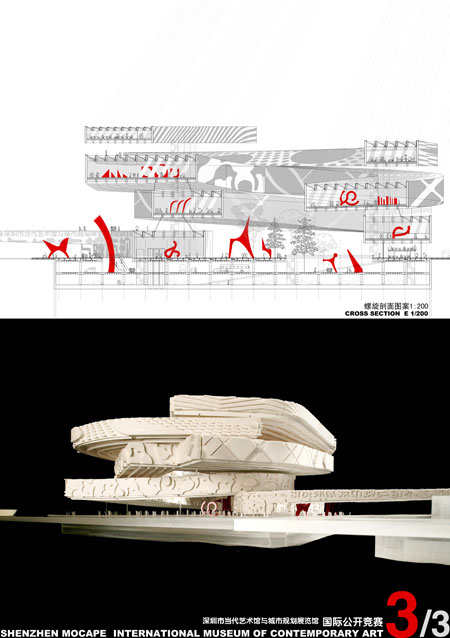
In order to properly light a museum the tradition asks to use light coming from the ceiling. If you want to use roof light to pull light into a building with several levels overlapped you must find the way to connect them with the sky through the ceiling. The technique used in this proposal is to separate the different levels and treat them as independent buildings. The natural way to articulate the relation between different parts in different levels that aim to go upwards is the spiral. This proposal recalls different strategies already used in other museums, specially that of the spiral in the New York Guggenheim Museum by Frank Lloyd Wright, extending this idea to the whole museum space in the proposal for MOCAPE.
The visitors, the people, enter the building by being lifted immediately to the upper level and inviting them to gently descend through the different exhibition spaces. This type of circulation offers both the speed and maximum efficiency of the lifts and the possibility to stroll down the museum promenade style following the path of the spiral. Thanks to the lifts, every exhibition space, every ramp, can be visited independently from the other areas of the museum.

INVITATION TO THE CITY
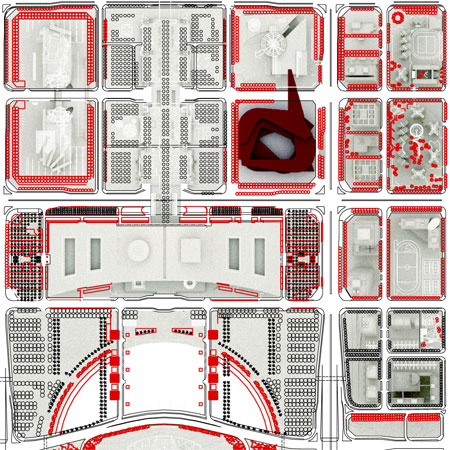
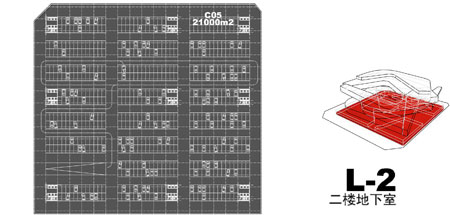
To establish a relation with the city and its urban surroundings, the proposal for MOCAPE takes advantage of the spiral structure to ascend and at the same time offer an access for the people to enter the core of the building, which is a courtyard planted with Chinese white pine (Pinus armandii) and spotted with sculpture gardens that allow the light to access the underground areas and make an easy path to and from the car park for the visitors to use.
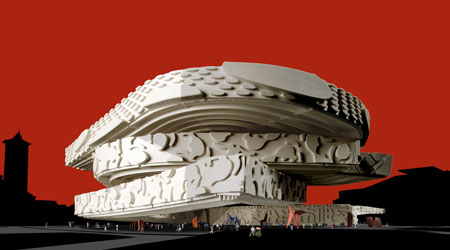
The façade to the city shows a casted wall, an ornamented skin that changes in its way up announcing the precious interior. The casting allows the light to create shadows that texturize the walls and helps to stress the change of the daylight.

STRUCTURE AND LIGHT
The proposal for the structure starts from a research on big span concrete structures. The exhibition spaces are devised as concrete bridges with concrete walls and a structure of concrete beams for the ceiling and floor that helps to control the light.
AR7021SZ-02-EQUIP.jpg

AR7021SZ-03-EQUIP.jpg

AR7021SZ-04-EQUIP.jpg

AR7021SZ-05-EQUIP.jpg

AR7021SZ-06-EQUIP.jpg

AR7021SZ-07-EQUIP.jpg

AR7021SZ-08-EQUIP.jpg

AR7021SZ-09-EQUIP.jpg

AR7021SZ-10-EQUIP.jpg

AR7021SZ-11-EQUIP.jpg

AR7021SZ-12-EQUIP.jpg

AR7021SZ-13-EQUIP.jpg

AR7021SZ-14-EQUIP.jpg

AR7021SZ-15-EQUIP.jpg

AR07011SH-Shanghái 2010 Exhibition

07 011 SHANGHAI 2010 EXHIBITION. SHANGHAI. 2007 8.465M2
  Spanish Pavilion for Shanghai 2010 competition

AR7011SH-01-EQUIP.jpg

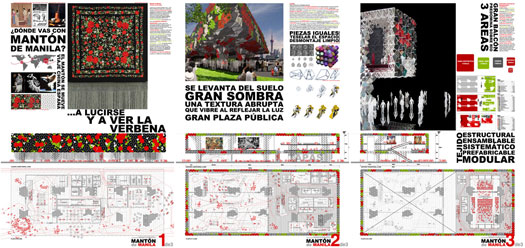
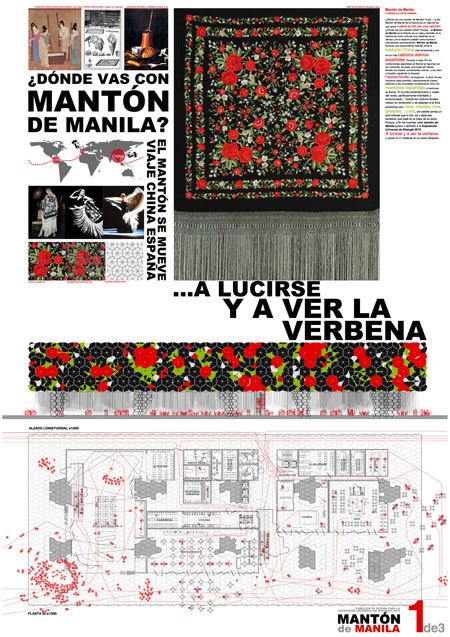
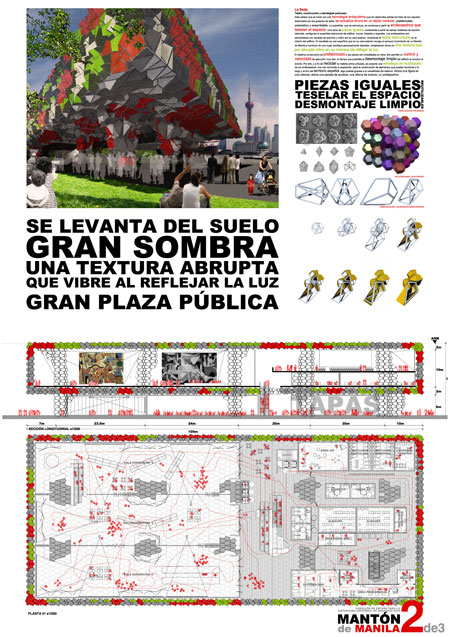
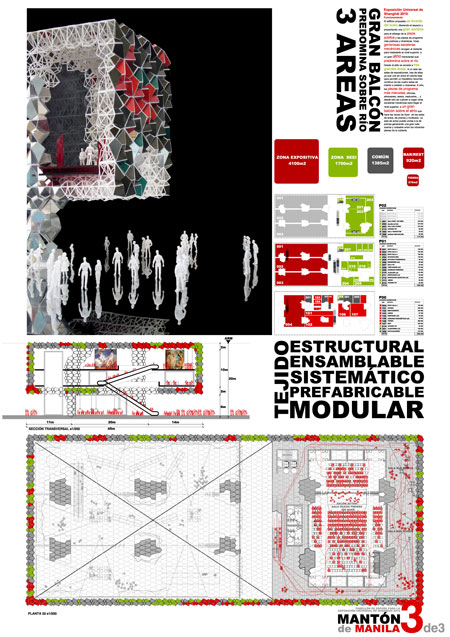
¿Dónde vas con mantón de Manila? Pués… La del Mantón de Manila es la historia de un viaje de ida que ahora vuelve al hilo de una canción. ¿Dónde vas con vestido chiné? Porque… el Mantón de Manila es la historia de un viaje y también es la historia de como culturas muy distantes en el tiempo y el espacio pueden comunicarse e intercambiar características. Una historia de culturas, y una historia comercial.
Mantón de Manila anuncia una sorprendente relación entre la tradición China más inmemorial y uno de los más castizos atavíos españoles. A la vez, muestra de forma auténtica cómo las rutas comerciales, las rutas marítimas que se abrieron en el siglo XV, sirvieron para mezclar culturas dejando bien claro que para enriquecer lo propio no hay como abrirse a lo ajeno.
El Mantón de Manila traza un viaje que se inicia en China quizá 3.000 años antes de Cristo, cuando, en el ámbito de la cultura Yǎngsháo wénhuà, tenemos datados los primeros trabajos con seda, y que ahora quiere desembarcar en la Exposición Universal de Shangái 2010 para, después de un periplo bien intercultural, escenificar un retorno al lugar de donde partió.
La historia de este periplo se inició con una tecnología antiquísima que sin destruirlos extrae los hilos de los capullos elaborados por los gusanos de seda. A partir de ahí una técnica artesanal convirtió esos hilos preciosos en mantones profusamente decorados con motivos florales y animales. Estos frutos del ingenio y sensibilidad humanos se convirtieron en productos que los mismos comerciantes chinos llevaron hasta Filipinas. En Manila fueron vistos por los comerciantes españoles del siglo XVI, que los describieron como compuestos de fina y no retorcida seda, blanca y de los más brillantes colores, lisas algunas, y otras bordadas con las más extrañas figuras, colores y modelos […]. De esta manera  no pudieron sustraerse a la tentación de incluirlos entre las mercaderías que seguían la denominada ruta de los Galeones de Manila. Esta travesía comercial cubría de dos a cuatro veces por año el trayecto entre Filipinas y Sevilla, vía Acapulco, en México, haciendo posible la llegada de productos chinos a la por entonces metrópoli española. Es por todo esto que una teoría defiende que el originariamente mantón chino de seda llegó a Sevilla siguiendo esta ruta. Otra teoría, un tanto legendaria, dice que llegó primero como cuadro de seda que por ser defectuoso era usado para empaquetar los fardos de tabaco. Una vez en tierra, estos cuadros eran divididos y las propias cigarreras les añadían unos insinuantes flecos para incluirlos en parte de su atuendo diario. Leyenda o no, esta segunda explicación enlaza perfectamente con otra realidad que, otra vez cantando, dice que a partir de la ópera Carmen, donde se retrata a las cigarreras sevillanas graciosamente ataviadas de mantones, ya estas prendas originariamente chinas pasarían a ser conocidas mundialmente como los mantones españoles o mantones de Manila. El mundo entremezclado y vuelto del revés, perfectamente hibridado y evolucionado… Donde los motivos florales crecen en dimensión y se adaptan a la flora autóctona con rosas, claveles, lirios, girasoles… y loto, sin perder jamás un aire oriental que le dio, da y dará ese exotismo que está en la base de su éxito. Porque, a fin de cuentas, este mantón de Manila quiere ir también a la Exposición Universal de Shangái 2010 A lucirse y a ver la verbena, y quizá no a meterse en la cama después.

AR7011SH-02-EQUIP.jpg

AR7011SH-03-EQUIP.jpg

AR7011SH-04-EQUIP.jpg

AR7011SH-05-EQUIP.jpg

AR7011SH-06-EQUIP.jpg

AR7011SH-07-EQUIP.jpg

AR7011SH-08-EQUIP.jpg

AR7011SH-09-EQUIP.jpg

AR7011SH-10-EQUIP.jpg

AR07008PA-Palma Interpretation Center

07 008 CENTRE INTERPRETACIÓ. PALMA DE M. 2007 6.900M2
  Interpretation Centre in Palma competition

AR7008PA-01-EQUIP.jpg

Mar Mediterráneo
Latitud: 39,35 N 
Longitud: 2,39 E
Palma de Mallorca
Mallorca
Archipiélago Balear
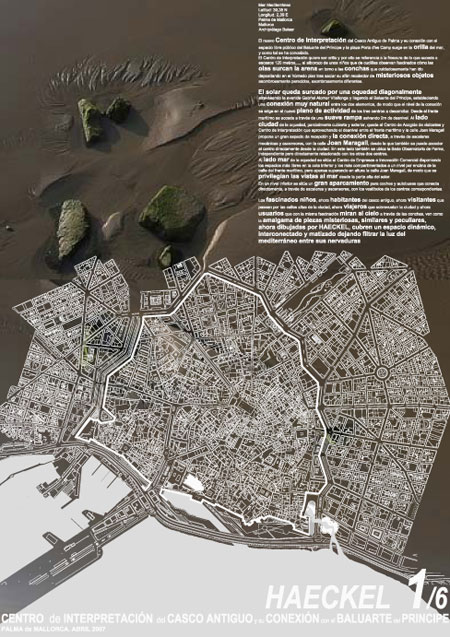
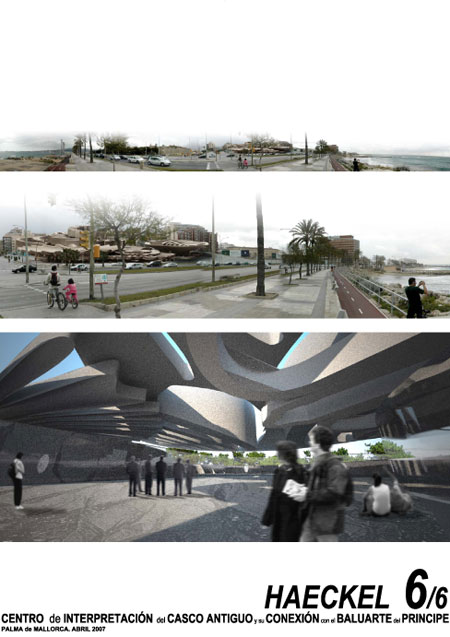
El nuevo Centro de Interpretación del Casco Antiguo de Palma y su conexión con el espacio libre público del Baluarte del Príncipe y la plaza Porta d’es Camp surge en la orilla del mar, y como tal se ha concebido.
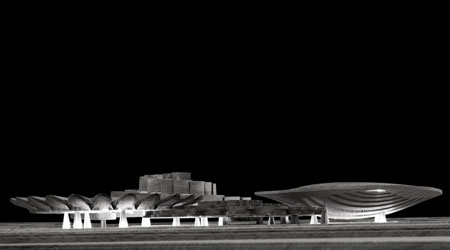
El Centro de Interpretación quiere ser orilla y por ello se referencia a la frescura de lo que sucede a escasos 120 metros,…, al alborozo de unos niños que de cuclillas observan fascinados cómo las olas surcan la arena en torno a las conchas que cuidadosamente han ido depositando en el húmedo piso tras saciar su afán recolector de misteriosos objetos asombrosamente parecidos, asombrosamente diferentes.
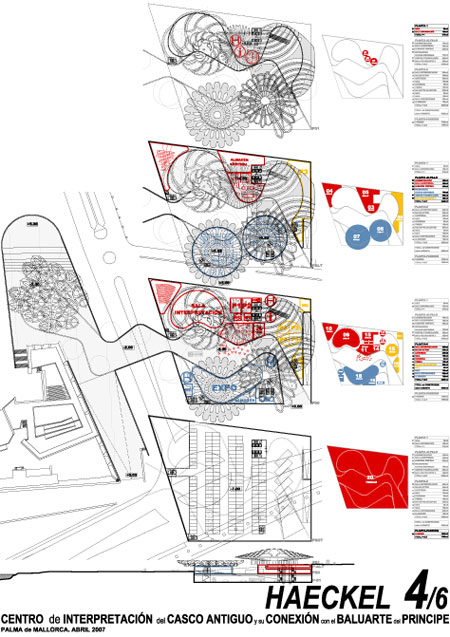
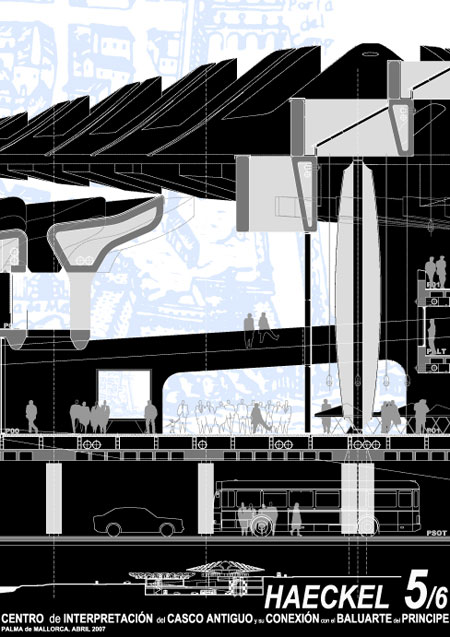
El solar queda surcado por una oquedad diagonalmente atravesando la avenida Gabriel Alomar Vilallonga y llegando al Baluarte del Príncipe, estableciendo una conexión muy natural entre los dos elementos, de modo que el nivel de la conexión se erige en el nuevo plano de actividad de los tres centros a desarrollar. Desde el frente marítimo se accede a través de una suave rampa salvando 2m de desnivel. Al lado ciudad de la oquedad, parcialmente cubierta y exterior, queda el Centro de Acogida de visitantes y Centro de interpretación que aprovechando el desnivel entre el frente marítimo y la calle Joan Maragall propone un gran espacio de recepción y la conexión directa, a través de escaleras mecánicas y ascensores, con la calle Joan Maragall, desde la que también se puede acceder al centro directamente desde la ciudad. En este lado también se ubica la Sede Observatorio de Palma, independiente pero directamente relacionado con los otros dos centros.
Al lado mar de la oquedad se sitúa el Centro de Empresas e Innovación Comercial disponiendo los espacios más libres en la cota inferior y los más compartimentados a un nivel por encima de la calle del frente marítimo, pero apenas superando en altura a la calle Joan Maragall, de modo que se privilegian las vistas al mar desde la parte alta del solar.
En un nivel inferior se sitúa un gran aparcamiento para coches y autobuses que conecta directamente, a través de escaleras y ascensores, con los vestíbulos de los centros correspondientes.
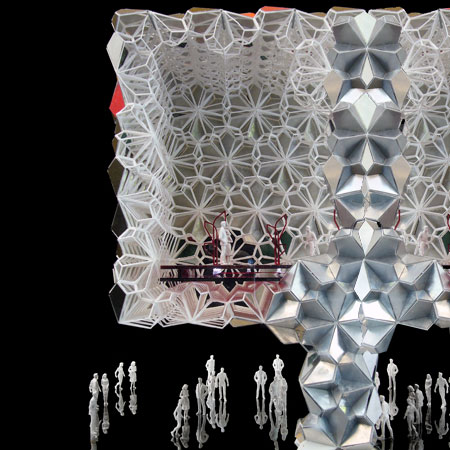
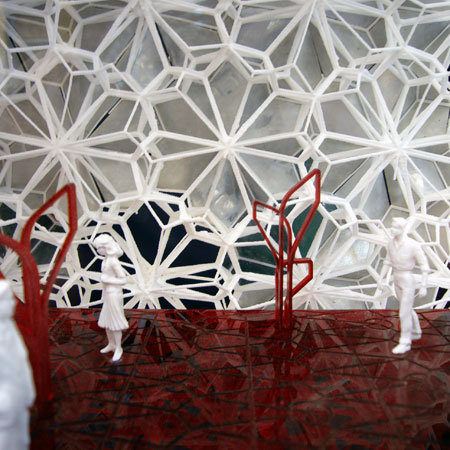
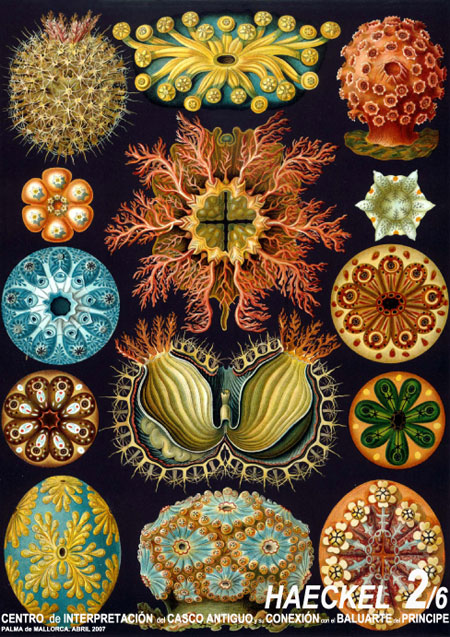
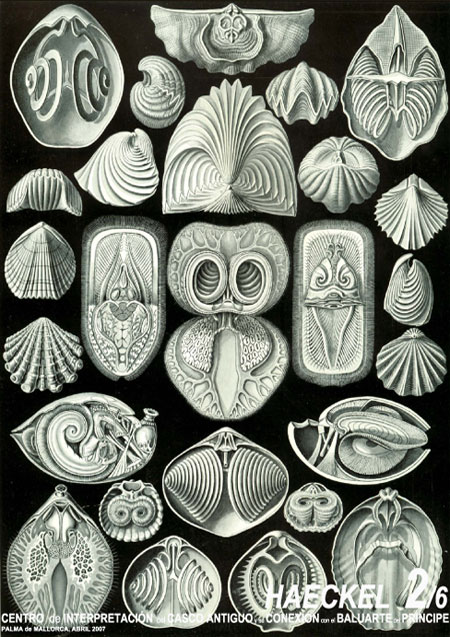
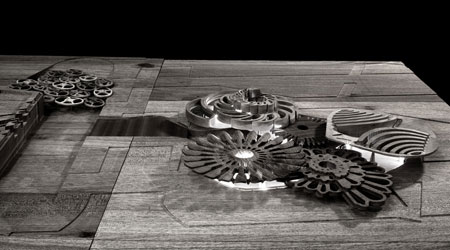
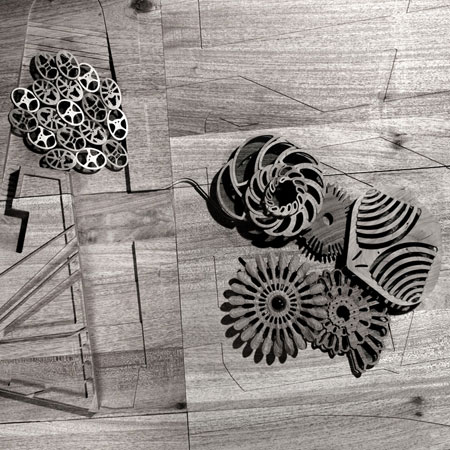
Los fascinados niños, ahora habitantes del casco antiguo, ahora visitantes que pasean por las calles altas de la ciudad, ahora viajeros que sobrevuelan la ciudad y ahora usuarios que con la misma fascinación miran al cielo a través de las conchas, ven como la amalgama de piezas misteriosas, similares y peculiares, ahora dibujadas por Haeckel, cubren un espacio dinámico, interconectado y matizado dejando filtrar la luz del Mediterráneo entre sus nervaduras.

AR7008PA-02-EQUIP.jpg

AR7008PA-03-EQUIP.jpg

AR7008PA-04-EQUIP.jpg

AR7008PA-05-EQUIP.jpg

AR7008PA-06-EQUIP.jpg

AR7008PA-07-EQUIP.jpg

AR7008PA-08-EQUIP.jpg

AR7008PA-09-EQUIP.jpg

AR7008PA-10-EQUIP.jpg